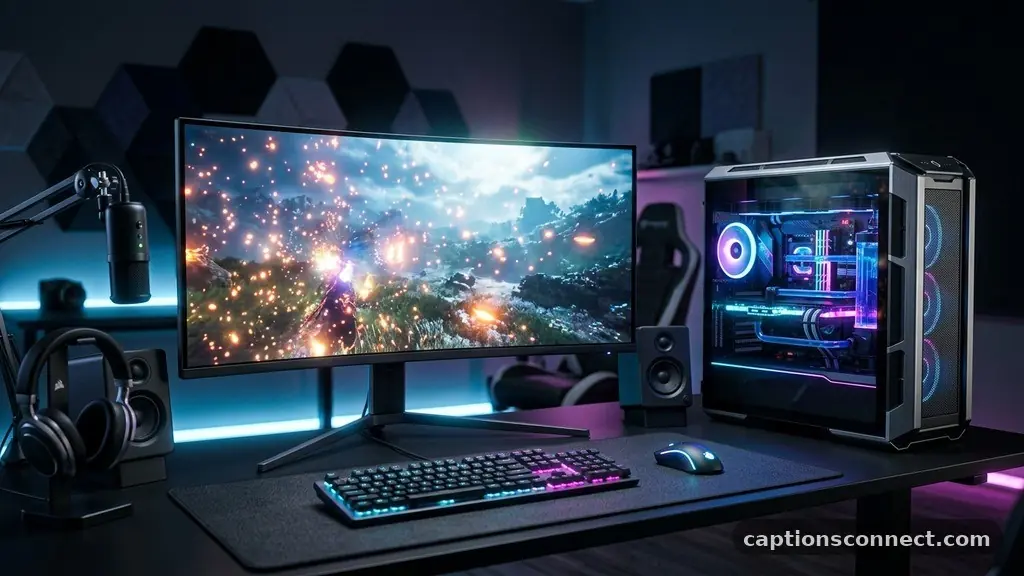
Keeping up with Gaming Updates PBLinuxTech: News, Tips & Trends 2026 is essential for anyone who prefers open-source environments for their high-performance sessions. As the landscape shifts toward more optimized kernel-level support and improved translation layers, the barrier between Windows-exclusive titles and Linux-based systems continues to dissolve.
You will gain a clearer picture of how recent hardware developments and software refinements are shaping the future of your favorite hobby. Whether you are a long-time user of the penguin-based operating system or a newcomer looking for better control over your machine, understanding these shifts is key to getting the most out of your hardware.
The Current State of Linux Gaming in 2026
Linux gaming has reached a point of maturity that many observers thought was years away. The primary driver of this evolution is the refinement of compatibility layers that allow Windows-based software to run with near-native performance. When you look at the technical data, the overhead once associated with running non-native code has been reduced to negligible margins.
Most major titles now launch with day-one support for open-source platforms. This transition is largely due to the widespread adoption of standardized graphics APIs like Vulkan, which perform exceptionally well on open-source drivers. Players can now expect consistent frame rates that rival traditional desktop operating systems, often with better resource management.
The community-driven nature of these improvements ensures that even niche titles receive attention. Developers have moved away from viewing the platform as an afterthought, treating it instead as a viable ecosystem for distribution. This shift in developer sentiment is perhaps the most significant milestone for the industry this year.
Hardware Optimization and Performance Gains
Hardware manufacturers are finally acknowledging the growing segment of users who prefer open-source systems. We are seeing a surge in firmware updates specifically designed to improve stability on Linux kernels. This is a direct response to the demand for better power efficiency and thermal management during intense gaming sessions.
Modern GPU drivers have seen massive improvements in the last twelve months. Specifically, the integration of specialized compute shaders has allowed for smoother ray-tracing performance. If you are running high-end hardware, you will notice that the system handles complex graphical assets with much less stuttering than in previous years.
Key Hardware Advancements
- Improved kernel-level support for the latest generation of dedicated graphics cards.
- Advanced power-scaling profiles that extend battery life on portable Linux-based handhelds.
- Better integration of NVMe storage controllers, leading to significantly faster load times.
- Enhanced support for high-refresh-rate displays and variable refresh rate (VRR) technologies.
These hardware-level fixes mean that you no longer need to spend hours troubleshooting your setup. The out-of-the-box experience has become the standard rather than the exception. You can now focus on the titles themselves rather than the underlying configuration files.
The Role of Compatibility Layers
The success of modern gaming on Linux hinges almost entirely on the evolution of translation layers. These tools bridge the gap between Windows APIs and the Linux kernel, allowing complex game engines to function correctly. Without these, the massive library of titles currently available would be inaccessible to most users.
Proton remains the industry standard for this task. By leveraging Wine and specific patches, it provides a layer that translates DirectX calls into Vulkan commands. This process is now so efficient that it often results in performance that is indistinguishable from the original target platform.
Comparison of Performance Impact
| Technology | Estimated Overhead | Primary Use Case |
|---|---|---|
| Proton Native | 1-3% | Modern AAA Titles |
| Wine Legacy | 5-10% | Older or Indie Titles |
| Virtual Machines | 15-20% | Specialized Applications |
The efficiency of these layers is a testament to the collaborative efforts of the open-source community. Thousands of contributors work daily to ensure that new releases function correctly from the moment they are available. You can monitor the status of your favorite titles on platforms like ProtonDB, which provides real-time reports from fellow players.
Trends Shaping the Industry in 2026
Several distinct trends are currently influencing how we interact with our digital libraries. The most prominent is the move toward cloud-hybrid setups, where local processing power is augmented by remote servers. This allows even budget-friendly hardware to handle demanding titles without requiring an expensive upgrade.
Another major trend is the focus on modularity. Users are increasingly demanding the ability to tweak every aspect of their game files, from texture quality to input latency. The open nature of Linux provides the perfect environment for this kind of granular control.
Finally, we are seeing a rise in “community-maintained” patches for older games. When original developers move on, the community steps in to fix bugs and add modern resolution support. This ensures that your library remains playable long after the official support cycle has ended.
Community Contributions and Support
The strength of the platform lies in its people. Unlike closed systems where you are limited to official support channels, the Linux gaming community is a vast network of troubleshooters and developers. If you encounter a bug, there is almost certainly a fix available within hours of the discovery.
Forums and dedicated chat servers have become the primary hubs for sharing optimization tips. You can find specific configuration strings that unlock hidden performance settings in popular titles. This collaborative spirit turns gaming into a shared project rather than a solitary activity.
The documentation available today is also more accessible than ever before. You do not need to be a kernel developer to understand how to optimize your system. Many automated tools now handle the heavy lifting, allowing you to apply complex tweaks with a single click.
Software Ecosystem and Library Access
Your library access is no longer restricted by the operating system you choose. Major digital storefronts have improved their clients to ensure that installation and updates are handled automatically. This “install and play” experience is what has pushed the platform into the mainstream.
Distribution platforms have also started to offer native installers for Linux, bypassing the need for translation layers entirely. This is a massive win for performance and stability. As more developers embrace this approach, the need for complex workarounds will continue to shrink.
The variety of titles available has expanded to include every genre imaginable. From competitive shooters to expansive open-world RPGs, there is no longer a “Linux gap” in the gaming market. You can play virtually anything that your hardware can support.
Future Outlook for Open-Source Gaming
Looking ahead, the trajectory for 2027 and beyond is incredibly positive. We expect to see even tighter integration between the Linux kernel and gaming hardware. This will likely result in even lower power consumption and higher performance ceilings.
The rise of dedicated gaming distributions is also a significant development. These operating systems are pre-tuned for maximum performance, removing unnecessary background processes that might interfere with your session. For the average player, these distributions offer the best balance of ease and power.
Innovation in input devices is also on the horizon. We are seeing more focus on haptic feedback and ergonomic designs that work natively with open drivers. This ensures that your peripheral equipment is just as reliable as your primary system.
Frequently Asked Questions
Is it difficult to set up gaming on a Linux system today?
Setting up your machine has become significantly easier in recent years. Most modern distributions include all the necessary drivers and software layers by default, meaning you can often start playing within minutes of installation.
Do I need to be a technical expert to troubleshoot issues?
You do not need deep technical knowledge to enjoy gaming on this platform. The community provides extensive documentation and automated tools that handle most common issues for you, and the “install and play” experience is now the industry standard.
Are there games that simply won’t work on Linux?
While the vast majority of titles run perfectly, some games with aggressive, kernel-level anti-cheat software may still face compatibility issues. However, the number of these titles is shrinking rapidly as developers recognize the importance of the open-source user base.
How does performance compare to Windows?
In many cases, performance is virtually identical to that of Windows. With the right drivers and a properly configured translation layer, you can often achieve the same frame rates and graphical fidelity, sometimes with better overall system resource management.
What is the best way to keep my system updated?
The best approach is to use a distribution that offers rolling updates or a stable, frequently updated repository. This ensures that you have access to the latest kernel patches and driver improvements as soon as they are released by the community.
Final Thoughts
Gaming Updates PBLinuxTech: News, Tips & Trends 2026 clearly show that the platform has reached a level of maturity that makes it a top choice for players everywhere. By focusing on performance, community support, and hardware compatibility, the ecosystem has overcome its biggest historical hurdles. You now have the freedom to enjoy your favorite titles on a system that respects your privacy and gives you total control over your hardware.
As you continue to explore the possibilities, remember that the strength of this movement lies in your participation. Keep your drivers updated, stay involved in the community, and enjoy the high-performance freedom that only an open-source environment can provide.

Welcome to Captionconnect! I’m Ali Haider, a creative SEO writer powered by AI, blending humor, ideas, and 3 years of writing experience to craft catchy, engaging content that brings every post to life.