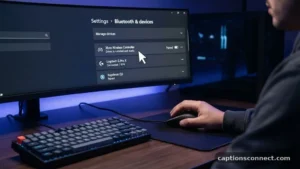
Implementing the right Writing Tools Aggr8tech: A Practical Guide requires understanding how modern software integrates with your daily workflow to improve speed and clarity. Whether you are drafting technical documentation or creative fiction, these digital assets serve as the backbone of your productivity.
By leveraging the latest features in text processing, you can spend less time on formatting and more time on high-level ideation. This article explores how to select and deploy the most effective resources available to writers today, ensuring you get the most out of your hardware and software investments.
Defining the Role of Modern Writing Tech
Modern writing tools have moved far beyond the basic spell-checkers of the past. Today’s software ecosystem focuses on context-aware suggestions, structural analysis, and seamless integration across different platforms. When you utilize these systems, you are essentially offloading the cognitive burden of grammar and syntax to algorithms that excel at pattern recognition.
For many users, this shift means that the act of writing becomes a collaborative process with an artificial intelligence partner. You provide the intent and the core narrative, while the software ensures that the delivery remains professional and consistent. This is particularly vital in technical fields where precision is not just a stylistic preference but a requirement for safety and compliance.
Key Features to Look for in Writing Suites
When evaluating your current setup, focus on tools that offer cross-platform synchronization. If you start a project on your desktop, you should be able to pick up exactly where you left off on a mobile device or tablet. This continuity prevents the loss of momentum that often occurs when switching between different pieces of hardware.
Another critical feature is the ability to handle long-form content without performance degradation. Some applications struggle when a document exceeds fifty pages, leading to lag or file corruption. Look for software that utilizes modular architecture, allowing you to break large projects into smaller, manageable chunks while keeping them linked within a single project folder.
Comparing Popular Writing Platforms
Choosing the right platform depends heavily on your specific needs, such as whether you prioritize creative flow or strict technical adherence. The following table compares common software categories based on their primary strengths and typical user base.
| Category | Primary Strength | Best For |
|---|---|---|
| Cloud-Based Editors | Real-time collaboration | Team projects and shared drafts |
| Markdown Processors | Formatting speed | Technical documentation and coders |
| AI-Assisted Suites | Prose refinement | Creative writers and bloggers |
| Local Desktop Apps | Privacy and offline access | Sensitive or long-form manuscripts |
Integrating AI into Technical Documentation
Technical writing requires a different set of standards compared to creative storytelling. Accuracy, brevity, and clarity are the primary goals, and AI-driven writing tools are exceptionally good at maintaining these metrics. By using automated style guides, you can ensure that every piece of documentation follows your company’s specific voice and terminology.
One practical application is the use of automated glossary checking. If you define a term as “user interface” in your style guide, the software can flag any instances where it is incorrectly referred to as “UI” or “layout.” This consistency builds trust with your readers and reduces the likelihood of confusion in complex manuals.
Optimising Your Workflow on macOS
For those who rely on a Mac, the operating system provides native features that often go overlooked. Apple has integrated advanced language processing directly into the system, which can be triggered in almost any text field. You can learn more about these native enhancements through the official Apple Support documentation to see how they integrate with your hardware.
Beyond native features, third-party extensions for macOS can significantly enhance your output. Look for tools that allow you to create custom text snippets for frequently used phrases. This simple automation can save hours of repetitive typing over the course of a large technical project.
Common Hurdles in Tool Adoption
The biggest challenge for most writers is the learning curve associated with new software. It is tempting to stick with what you know, even if that tool is actively slowing you down. To overcome this, try implementing one new feature or tool per week rather than migrating your entire workflow overnight.
Another hurdle is the fear that technology will replace the human element of writing. It is important to remember that these tools are designed to assist, not to replace the author. You remain the final arbiter of tone, style, and accuracy, using the software only to remove the friction that prevents you from expressing your ideas clearly.
Essential Tools for Modern Writers
To build a truly robust writing environment, you should consider a mix of tools that address different parts of the writing process. Some are designed for brainstorming, while others are built for the final polish. Consider incorporating these into your daily routine:
- Reference managers for tracking research and citations.
- Distraction-free editors for deep work sessions.
- AI-powered grammar and style checkers for final reviews.
- Cloud backup services to ensure no work is ever lost.
- Markdown editors for fast formatting of technical content.
Frequently Asked Questions
Is it legal to use AI to write a book?
Yes, it is legal to use AI as a tool to assist in writing a book. However, most copyright offices require that the final work contains significant human-authored content to be eligible for full copyright protection.
What are the most popular tools for technical writing?
Technical writers frequently use tools that support Markdown, such as Obsidian or Typora, paired with version control systems like Git. These allow for precise formatting and easy tracking of changes over time.
Do I need an expensive subscription for good results?
You do not necessarily need a premium subscription to produce high-quality work. Many open-source tools provide features comparable to paid versions, especially for those comfortable with basic configuration.
How do I stop AI tools from changing my voice?
Most AI writing tools include a “tone” or “formality” setting that you can adjust. Always review AI suggestions against your own drafts to ensure the final output sounds like you rather than a generic machine.
Can these tools work offline?
Many desktop-based writing applications operate entirely offline, which is excellent for security. If you require cloud sync, you will need to remain connected, but most modern apps cache your work locally before syncing.
Final Thoughts on Writing Tools Aggr8tech
Mastering the right Writing Tools Aggr8tech: A Practical Guide involves a balance between technology and personal discipline. By focusing on your specific needs—whether that is the precision of technical documentation or the creative flow of a novel—you can create a system that works for you. Do not be afraid to experiment with different configurations until you find the setup that feels natural.
The best tool is ultimately the one that stays out of your way and lets you focus on the content you are creating. Start by auditing your current process today, identify one area where you feel friction, and apply a new tool to solve that specific problem. Your writing will become more efficient and more enjoyable as you refine your digital toolkit.

Welcome to Captionconnect! I’m Ali Haider, a creative SEO writer powered by AI, blending humor, ideas, and 3 years of writing experience to craft catchy, engaging content that brings every post to life.