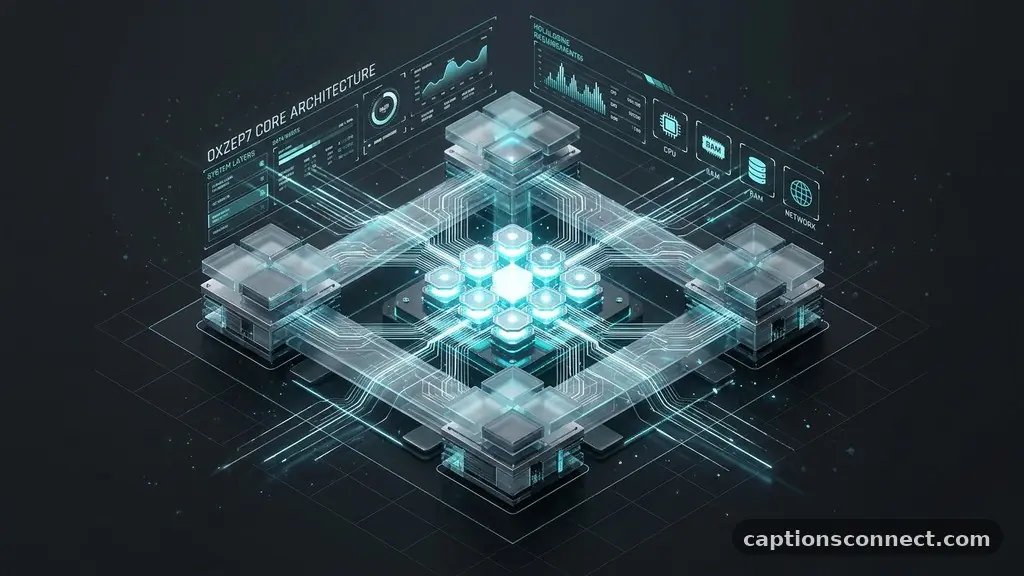
When you look to develop Oxzep7 software, you are stepping into a domain that prioritizes precision and modular efficiency above all else. Understanding the architectural requirements and the specific integration patterns is essential for any professional aiming to build within this ecosystem.
By focusing on the core logic and the underlying data structures early in your project, you ensure that your final product remains maintainable and scalable. This article provides the foundational knowledge you need to navigate the development process, manage dependencies, and optimize your codebase for peak performance in modern production environments.
Core Architecture and System Requirements
To develop Oxzep7 software effectively, you must first understand that the platform relies on a strictly decoupled architecture. Unlike legacy systems that bundle UI and business logic, this environment enforces a clear separation of concerns.
Developers who prioritize modularity from the outset find that their code is significantly easier to test and debug as the project expands. You need to familiarize yourself with the API gateway protocols that act as the primary interface for all external communications.
The system requires developers to work with asynchronous data streams rather than traditional synchronous request-response cycles. This choice allows the software to handle high concurrency levels without hitting memory bottlenecks.
When you are planning your initial modules, keep the memory footprint low by utilizing lightweight data structures. If you fail to account for these resource constraints early on, you will likely face significant refactoring hurdles during the later stages of your project.
Managing Dependencies and Integration
A critical aspect of working in this ecosystem is the management of external libraries. You should avoid importing heavy, monolithic frameworks that introduce unnecessary bloat into your build.
Instead, look for micro-libraries that perform singular tasks with high efficiency. The package manager integrated into the development environment is designed to handle version conflicts automatically, but you should still perform manual audits of your dependency tree.
Integration is often the most time-consuming phase of the cycle. You will be interacting with various databases and third-party services that require specific authentication tokens.
Ensure that your secret management strategy is hardened from day one to prevent credential leakage. Using environment variables is the standard approach, and you should never hard-code API keys or database connection strings into your source files.
Optimizing Performance for High Loads
Performance isn’t just about raw processing speed; it is about how the software handles stress under peak conditions. When you develop Oxzep7 software, you must incorporate observability tools that provide real-time metrics on latency and error rates.
Without these insights, you are essentially flying blind when it comes to identifying potential bottlenecks. Focus on optimizing your critical path code by minimizing redundant database calls and caching frequently accessed data.
Database indexing is another area where developers often fall short. If your queries are performing full table scans, your application will eventually slow to a crawl as your data grows. Use EXPLAIN plans to analyze query performance and adjust your indexes accordingly.
Remember that write-heavy applications require a different indexing strategy compared to read-heavy ones. Balancing these needs is part of the art of professional software engineering.
Essential Programming Languages and Syntax
While the platform is language-agnostic in its communication layers, it favors performance-oriented languages for core logic. You will find the most success by leveraging languages that offer manual memory management or highly efficient garbage collection.
Rust, Go, and C++ are frequently utilized by engineers working on these systems due to their predictable performance profiles. If you are comfortable with these languages, you will find the transition to this specific environment much smoother.
Choosing the Right Tech Stack
* Rust: Excellent for memory safety and performance-critical components.
* Go: Ideal for building concurrent services and microservices.
* TypeScript: Recommended for the frontend or management consoles.
* Python: Useful for data processing scripts and internal tooling.
Consistency in your syntax and style is vital for team collaboration. Adopting a strict linter and a standardized formatter will save countless hours during code reviews. When you force every developer to adhere to a single style guide, you reduce cognitive load and make it easier to spot bugs in the logic rather than the formatting.
Data Handling and Security Protocols
Security is not an afterthought; it is a fundamental requirement of the development process. When handling user data, you must ensure that all traffic is encrypted in transit using TLS 1.3 or higher.
At rest, data should be encrypted using AES-256 standards to protect against unauthorized access in the event of a physical storage breach. These are not merely suggestions but industry-standard requirements for professional software developers.
You should also implement a robust input validation layer. Never trust data coming from the client side, as it can be easily manipulated to perform injection attacks.
Use strongly typed schemas to validate the structure and content of incoming JSON payloads. By rejecting malformed data at the edge of your network, you protect your backend services from unnecessary load and potential security vulnerabilities.
Testing Strategies for Reliability
Reliability is built through a tiered testing strategy that covers unit, integration, and end-to-end scenarios. You should aim for high test coverage, but do not mistake quantity for quality.
Focus your efforts on testing the most complex parts of your logic where bugs are most likely to hide. Mocking external dependencies is essential for running tests in an isolated environment, but ensure your mocks accurately reflect the behavior of the real services.
Continuous integration pipelines should be configured to run your entire test suite on every pull request. If a build fails, it should block deployment until the issue is resolved.
This creates a culture of accountability where developers are responsible for the quality of their own code. Automated testing is the only way to scale your development speed without sacrificing the stability of your software programs.
Comparative Development Metrics
Understanding how your project compares to industry standards helps you set realistic goals for your team. The following table illustrates typical performance benchmarks for various development stages within this architecture.
| Metric | Target Value | Monitoring Tool |
|---|---|---|
| API Latency | < 50ms | Prometheus |
| Test Coverage | > 85% | SonarQube |
| Build Time | < 5 minutes | Jenkins/CircleCI |
| Deployment Frequency | Daily | Kubernetes |
Meeting these targets requires a commitment to iterative improvement. You should not expect to hit these numbers on day one of your project.
Instead, treat them as milestones that you reach through consistent refactoring and performance tuning. If you find your metrics drifting, it is time to pause feature development and focus on technical debt.
Common Hurdles and How to Overcome Them
Many developers struggle with the steep learning curve associated with distributed systems. It is common to feel overwhelmed by the sheer number of moving parts in a complex environment.
Break your project into smaller, manageable chunks that can be completed in short sprints. This provides a sense of progress and allows you to validate your assumptions at every step.
If you encounter a problem that seems unsolvable, consult the official W3C technical standards to ensure your implementation aligns with established web practices. Often, the solution lies in a better understanding of the underlying protocols rather than a workaround in your code.
Connecting with community forums or local developer groups can also provide fresh perspectives on your specific challenges. Learning from the mistakes of others is the fastest way to accelerate your own growth as a software developer.
FAQ: Common Developer Questions
What is the most important skill for a developer in this field?
The most important skill is the ability to think in terms of systems rather than just lines of code. Understanding how different components interact and fail is far more valuable than knowing the syntax of a specific language.
Is it necessary to use a specific IDE for development?
While you can use any editor you prefer, using an IDE with strong support for static analysis and debugging is highly recommended. Tools that provide real-time feedback on your code quality will help you avoid common pitfalls.
How do I handle technical debt in a fast-paced environment?
Technical debt is inevitable, but it must be managed. Allocate a fixed percentage of your sprint time to refactoring and upgrading dependencies. This ensures that the debt does not accumulate to a point where it prevents future development.
Should I prioritize performance or readability?
You should prioritize readability unless you have proof that performance is a bottleneck. Clear code is much easier to maintain and optimize later, whereas “clever” but unreadable code is a liability that often hides bugs.
How do I stay updated with changes to the platform?
Subscribe to official developer newsletters and monitor the repository’s changelog. Being an active participant in the community will give you early access to new features and best practices as they evolve.
Conclusion
Building high-quality applications requires a blend of technical discipline and a willingness to adapt to new requirements. When you develop Oxzep7 software, remember that your primary goal is to create a maintainable system that provides value to the end user. Focus on writing clean code, maintaining rigorous testing standards, and staying informed about the latest architectural patterns.
By following these principles, you will be well-equipped to handle the complexities of modern software development. Always be prepared to iterate, as the landscape of programming is constantly shifting. Start small, build securely, and keep your focus on long-term scalability to ensure your projects remain relevant for years to come.

Welcome to Captionconnect! I’m Ali Haider, a creative SEO writer powered by AI, blending humor, ideas, and 3 years of writing experience to craft catchy, engaging content that brings every post to life.